
We’re an eco-conscious family who have been systematically changing every aspect of our lives since 2018, from pledging to fly only once a year to divesting from unethical banks. With regards to day-to-day living, we can’t remember the last time we bought anything from a store without first checking if someone was giving it away or selling it on second-hand marketplaces and Whatsapp groups. We consume organic, whole and plant-based food as much as possible.
I am Anusha, a human-centred designer and founder of Pickled: Preserving Humanity and my husband, Ananth, is a telecoms and data engineer. We have two lovely girls, aged 10 and 6, who’ve grown up on cloth nappies and hand-me-downs.
It’s important to us that anything we bring into our home has tread lightly on the planet while it was being made, including the ethics of the labour that went into creating it. So instead of adopting a ‘carbon tunnel vision’, we have chosen a mantra of ‘Kindness to planet and all its beings’ when we make our everyday decisions. We do this as much as possible while staying within our means.

The house was a project house from the start and we knew it needed refurbishment to make it safe and healthy. The various extensions by previous owners had been done in a cost-avoidant manner which led to the extended spaces being cold, damp and uninhabitable. Our main aim was to make the house safe, healthy and functional to live in.
Soon after we bought the house in 2021, we tried to make it habitable over the first year – we changed the flooring, updated the upstairs bathroom to make it functional and removed the polystyrene ceiling cladding. We removed the back boiler and fitted a combi-boiler as we knew that we didn’t have the budget to make the house fit for an ASHP installation back then. We got solar panels installed during the Solar Together scheme in 2022. We had also decided to use fittings and materials from second-hand marketplaces as much as possible to save on cost as well as to continue living by our values of not sourcing anything new unless it’s unavailable second-hand.
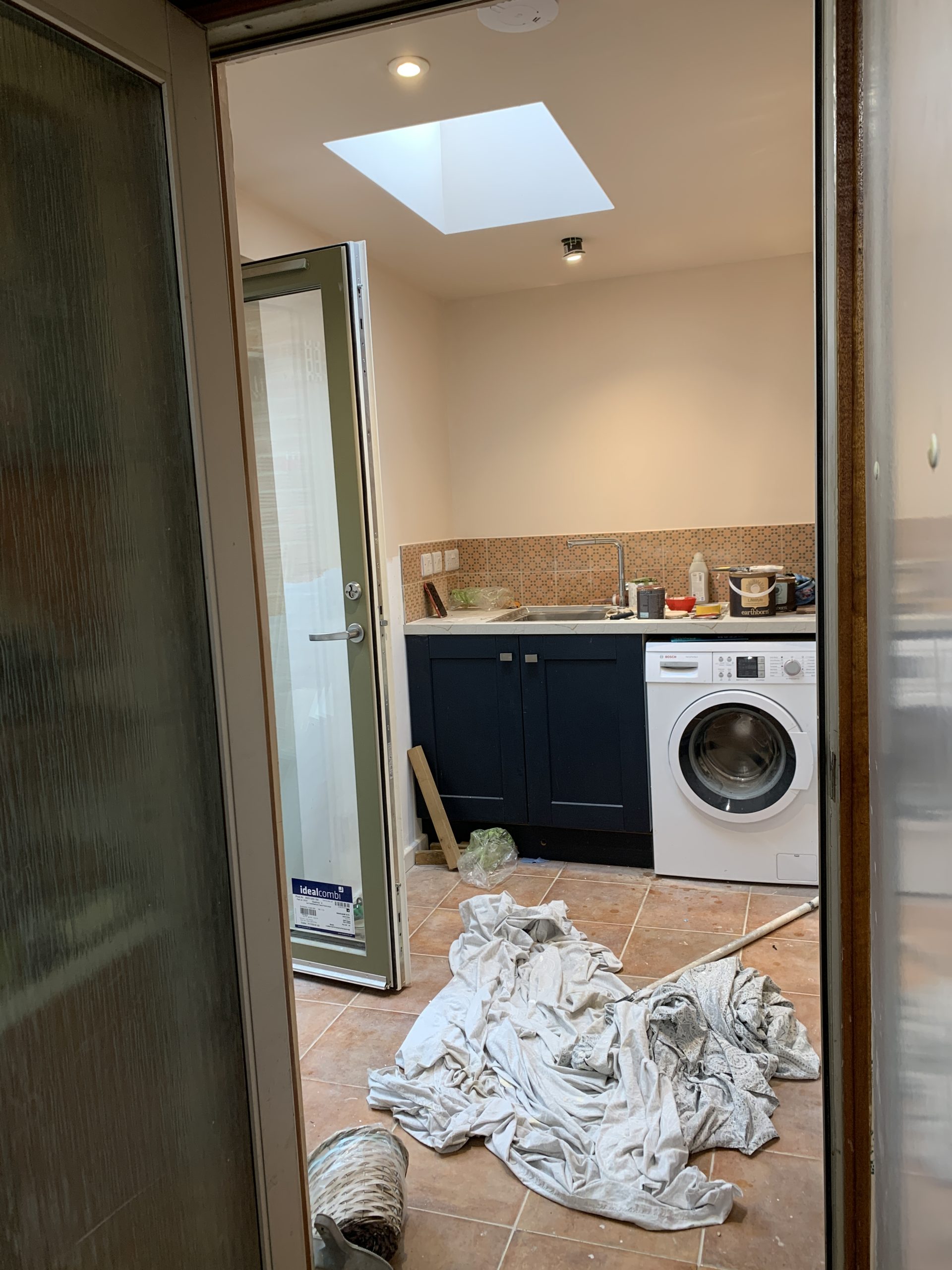
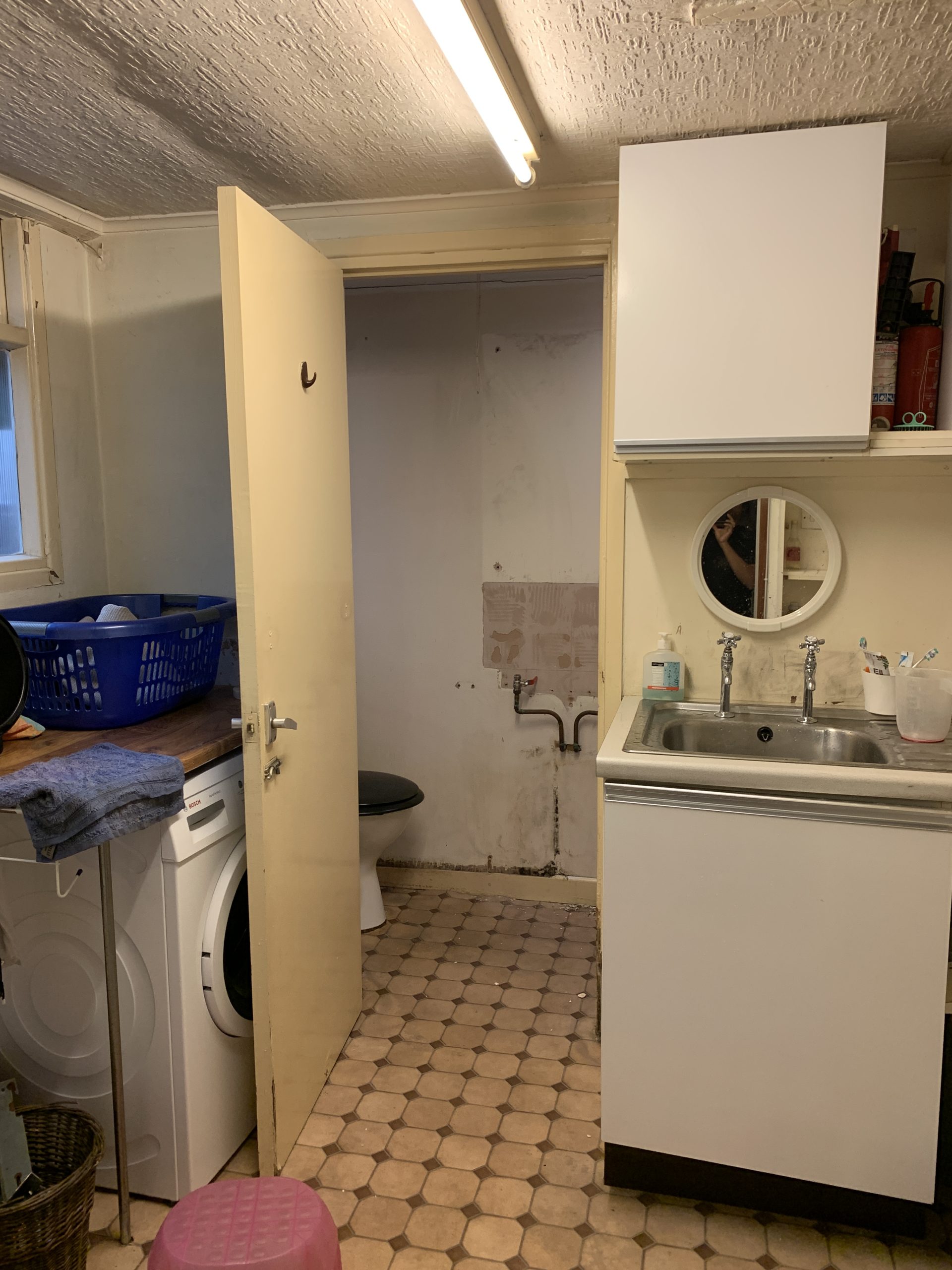
We created a new en-suite bedroom downstairs by closing off the access to the utility area from the previous ‘garage room’. We updated the porch, and side extension including the ‘garage room’, utility area and cloakroom. These areas got a new warm roof, internal wall insulation (IWI), retrofit underfloor heating (UFH) and triple glazing where possible.

We used PIR insulation in the roof, a combination of mineral wool and PIR internal insulation in all the east side walls except the front south side one that runs along the porch and the new bedroom. We decided to experiment with wood fibre insulation from Back To Earth for the front wall to see if it made a difference especially since we also wanted triple glazed windows and door.
The bedroom seems to maintain an even temperature both in winter and during the heatwave, so we’re happy with the insulation measures in the refurbed spaces. Our builders were new to the Back to Earth wood fibre insulation system but they managed to follow the instructions and we’re happy with the results.
To stay adaptable and resilient to a collapsing climate, we decided to go for triple glazing. When we couldn’t find the right sized windows or front door on the second hand market, we decided to source them from Viewnique, a VELFAC distributor and installer.
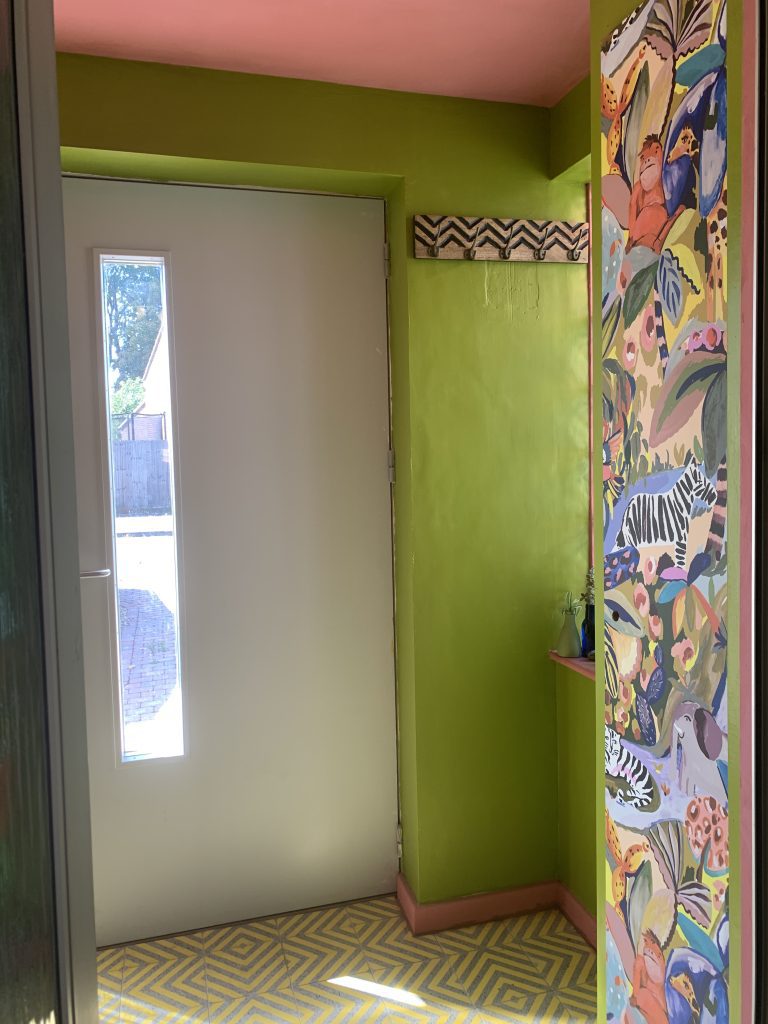
The windows and door are very good quality and build. We’re happy with the products, their insulation properties and with the fitter.
We have 3.51kWp of solar panels with a 2.6kWh battery
We’re pretty much being paid back what we consume, especially during the summer. We used to be with Good Energy for consumption but we’ve now switched to Octopus Energy for both consumption and exporting electricity back to the grid.

We fitted a 5,000 litre tank under our driveway to collect rainwater from the roofs. It has a pump that runs with every use. It draws some mains water to keep the pump running when the sensor detects low water levels, like this summer. It was the right time to get this rainwater harvesting system fitted as we were updating and fitting new toilets, a new utility area and driveway. During the winter months, two toilets, our washing machine and the outdoor tap is fed from the collected rainwater. If there was a system to switch between mains and rain, then we might have conserved the winter rainwater for the drought during the summer. The first time the pump drew mains water was on 12th May.
The rainwater harvesting system cost about £4,000 and the builders charged £4,000 for installation as there were going to be a few unknowns with this. Overall, we’re very happy to rely less on mains water, at least during the winter months, and it’s also good for reducing surface water flooding in our neighbourhood. Our water usage reading prior to installation was about 37 – 39 cubic meters and the reading in February 2026, after installation and 5 months of usage, was down to 28 cubic meters.
WALLS & CLADDING PRODUCT: Wood fibre IWI system
POST COMPLETION
OUR TOP TIPS
1. Do a cost-benefit analysis and get your priorities in the right order to focus on long-term well-being (yours and planet’s).
2. Identify your must-haves and 1-2 aspects from those to splurge on that will make the end result special.
3. Almost everything needed for a project may be found amongst someone’s surplus or unwanted items, if you prioritise cost and carbon saving over convenience and newness. The cost saving can be diverted to the 1-2 important or feel good aspects of the project which may otherwise be unaffordable.
Our dream list: EWI and upgrade glazing to triple glazed for remainder of the house, install ASHP and make internal modifications to the ground floor and loft conversion.
After incredible savings were made, we realised that not everyone has the capacity to source materials the way we did. We’re therefore considering setting up a service to help homeowners save cost and keep items in circularity by sourcing fittings and materials on the second-hand and surplus markets. This way, homeowners can get good quality products that are healthy for the home, and cost effective for the planet and the wallet, while getting well designed interiors and diverting savings towards items that are high priority but expensive.