We are recently retired and relocated to Cambourne 3 years ago to our 25 year old detached house, which our two children have now left. We chose the house, in part, for its suitability for full electrification, and have recently completed the quartet of EV, solar panels, battery and, now, air-to-air heat pump.
Our aims were to:
1. Cut our carbon footprint
2. Provide heating that is more flexible and tailored to our needs beyond full house Gas Central Heating
3. Reduce our energy bills
4. Make our house more resilient to possible power cuts (and heatwaves!)
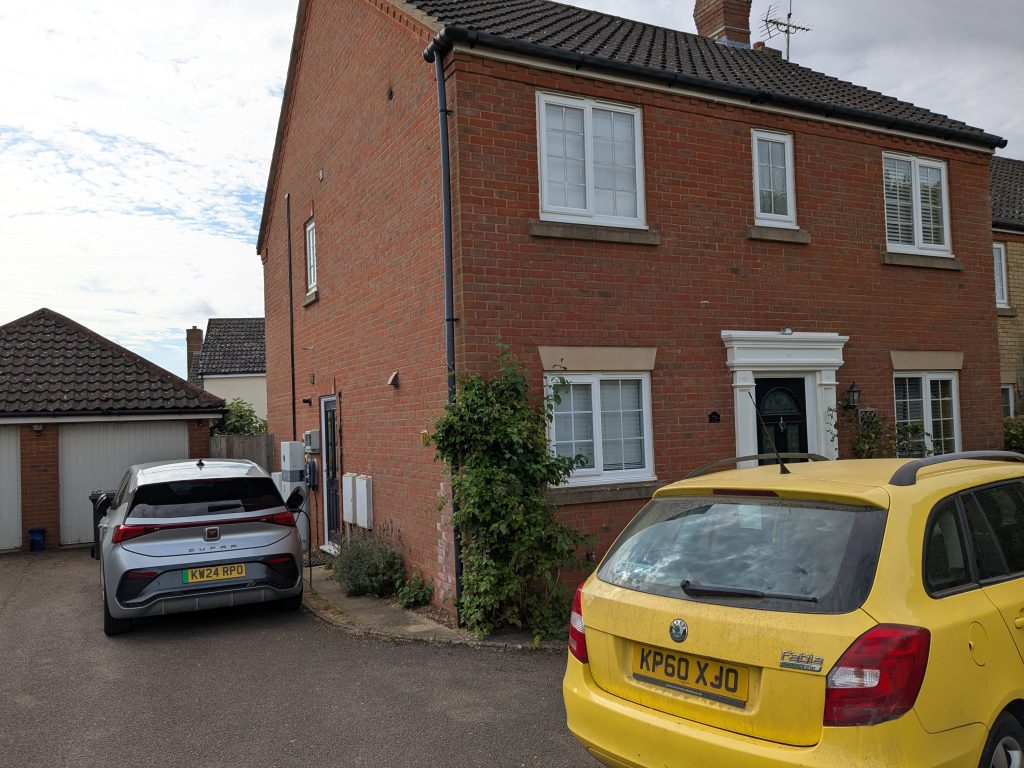
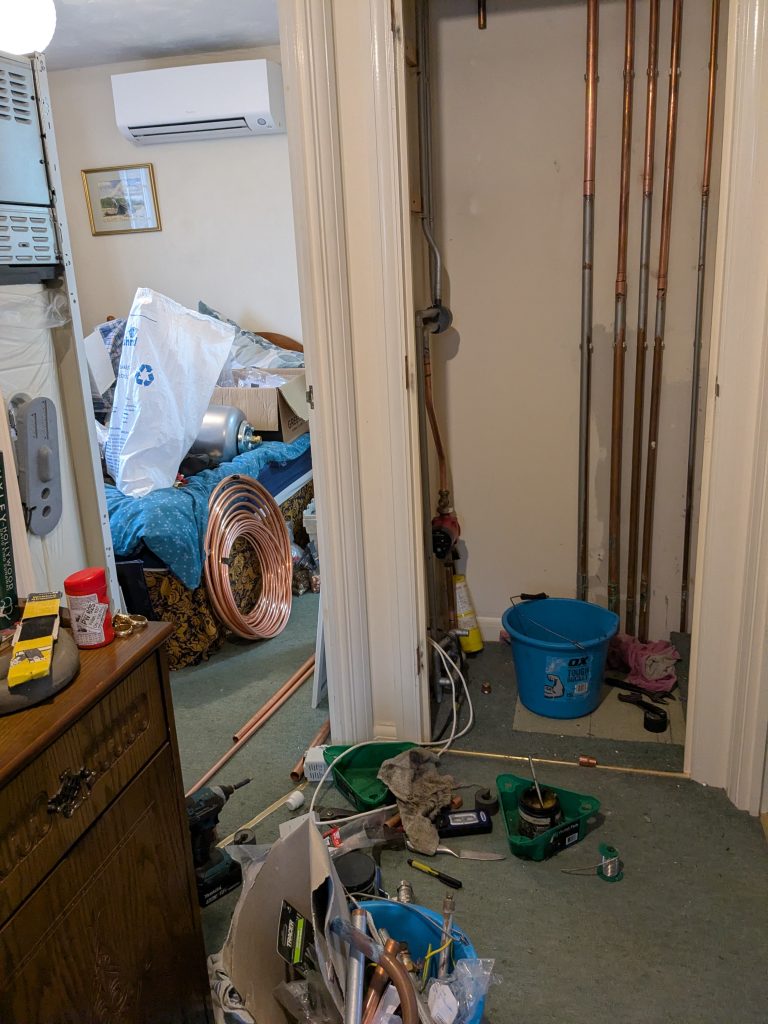
Photo: works in progress
Our approach included:
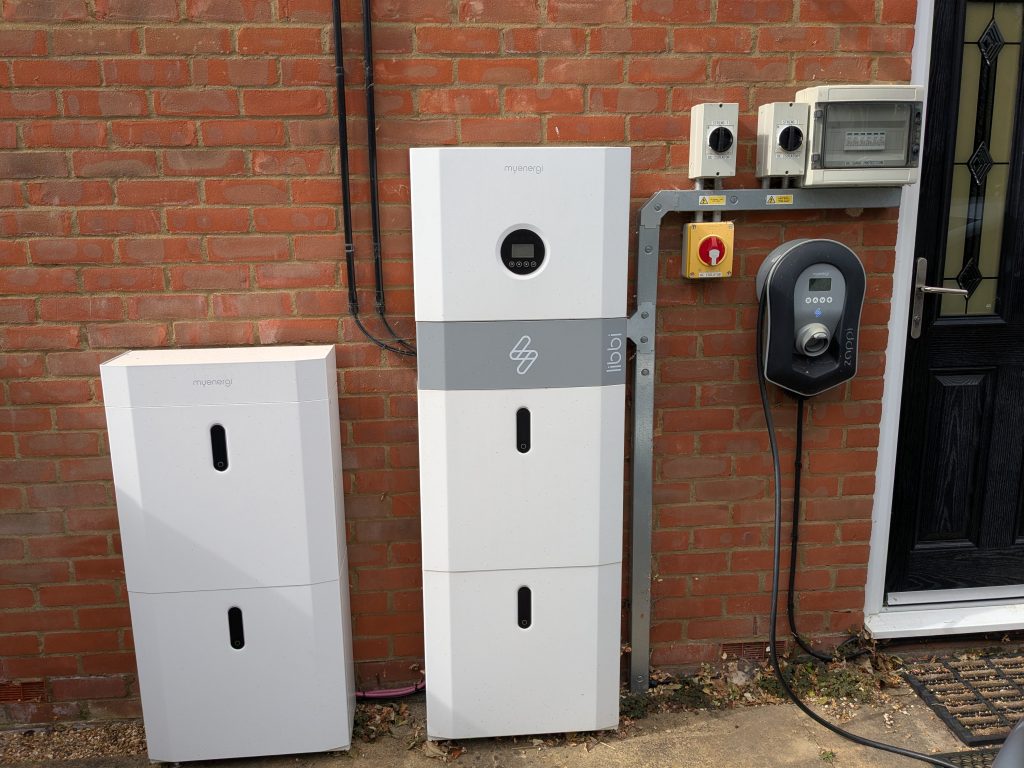
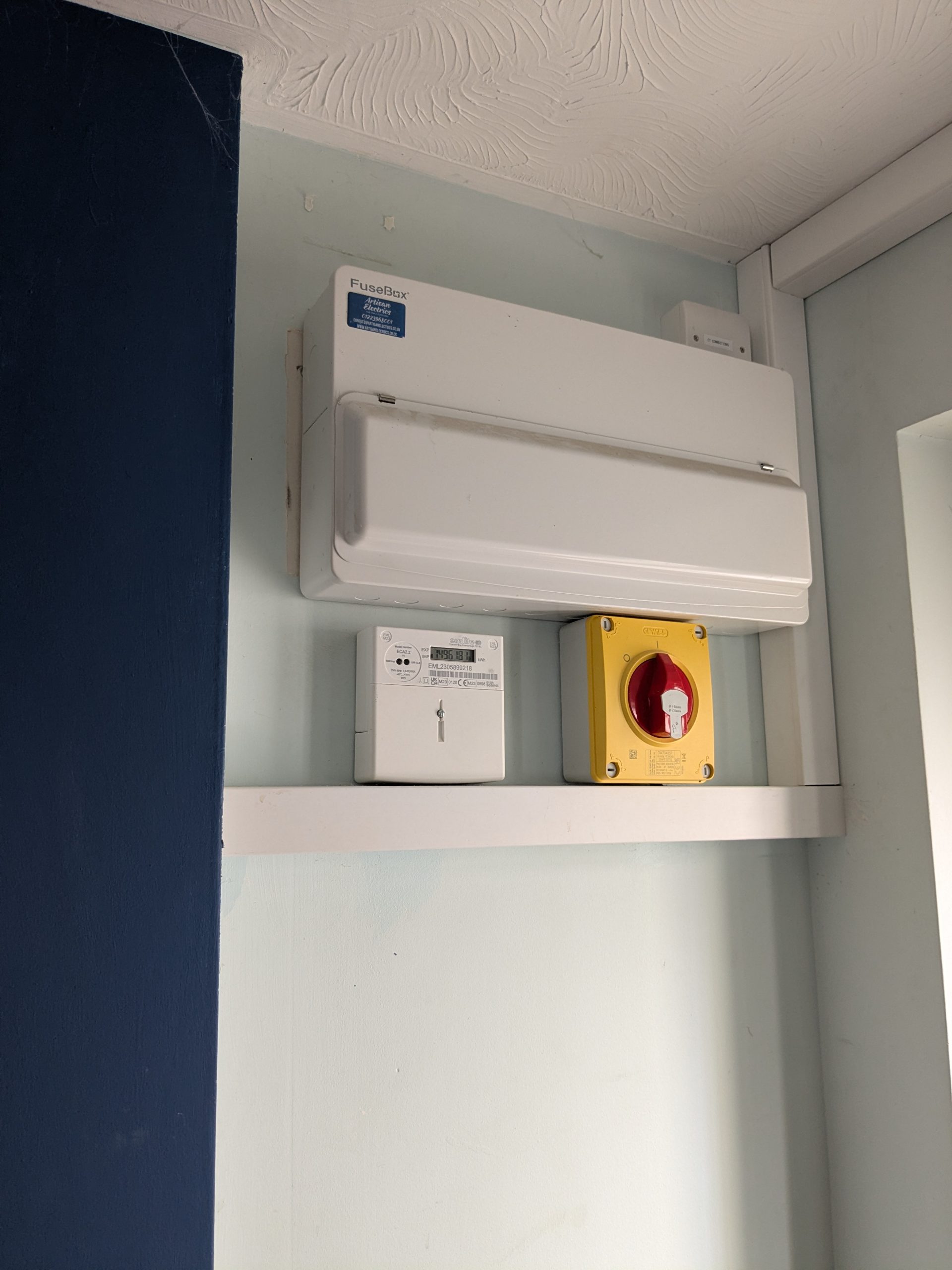
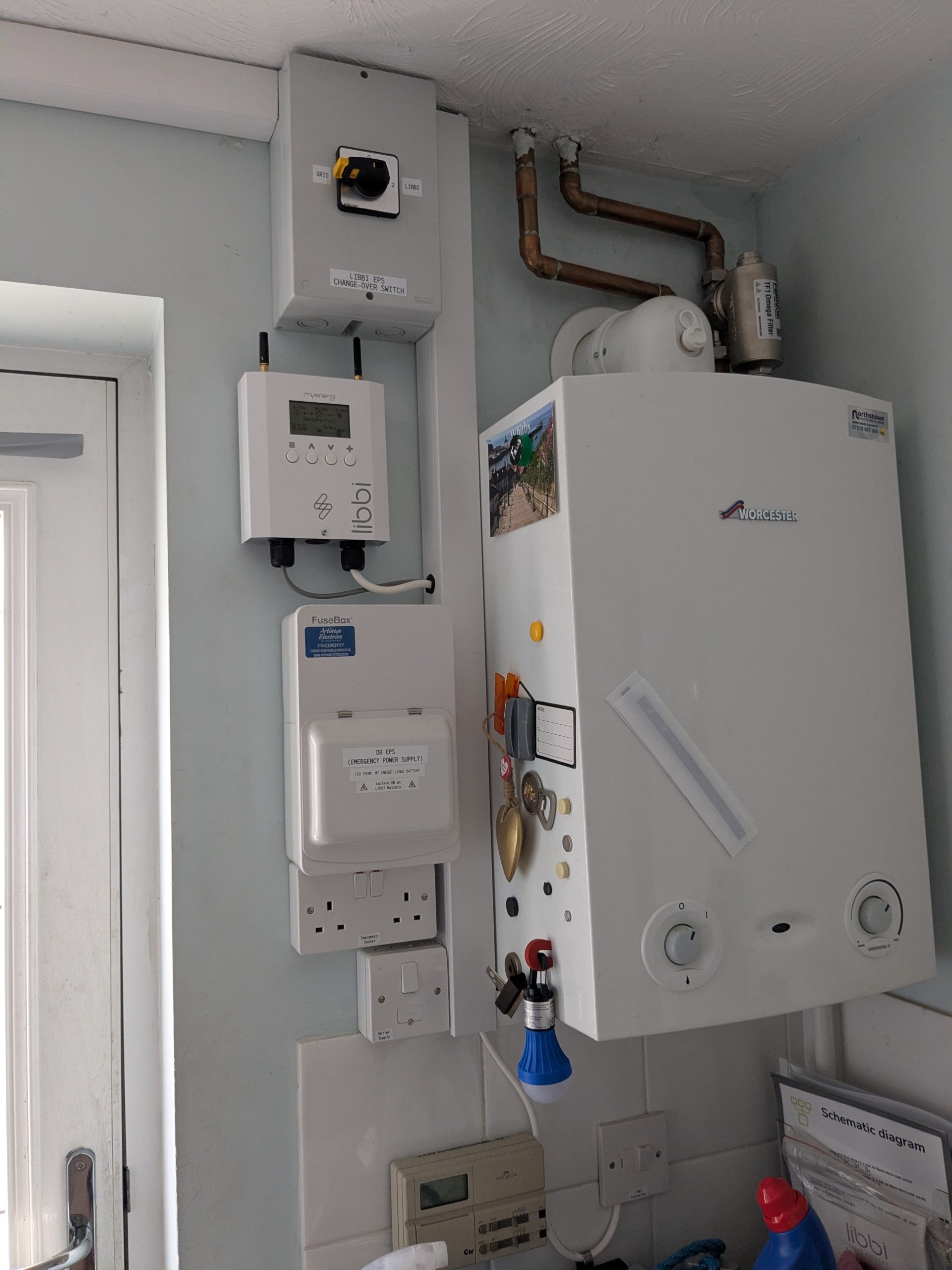
4kWp solar panels on SE facing roof with little or no shading. Myenergi libbi 5kWh hybrid inverter with 10kWh battery (later expanded to 20kWh). The inverter provides limited power to a single circuit in the event of a grid power cut.
Photo: battery, inverter and charging point for electric vehicle
The installer was asking for a premium price, but has provided good service and a high quality installation. They responded quickly when I had minor issues with the system and have always been friendly. The initial installation was delayed when the delivery and specification of the inverter was changed by the manufacturer at the last minute. The system has worked well and met my expectations apart from one incident when the inverter shut down completely for exactly 24 hours due to a firmware issue. It helped that I was IT literate and I was able to update the firmware on the system myself. The system occasionally loses contact with my wifi router, requiring me to reset the wifi, but it does not stop the system working. Due to using the Octopus Intelligent Go tariff, I optimise my battery operation to maximise export to the grid, and as this pays me more to export than it costs to import, my annual electricity bill fell to below zero in 2025.
The total cost included some work to upgrade the electric wiring in our property (new consumer unit, etc).
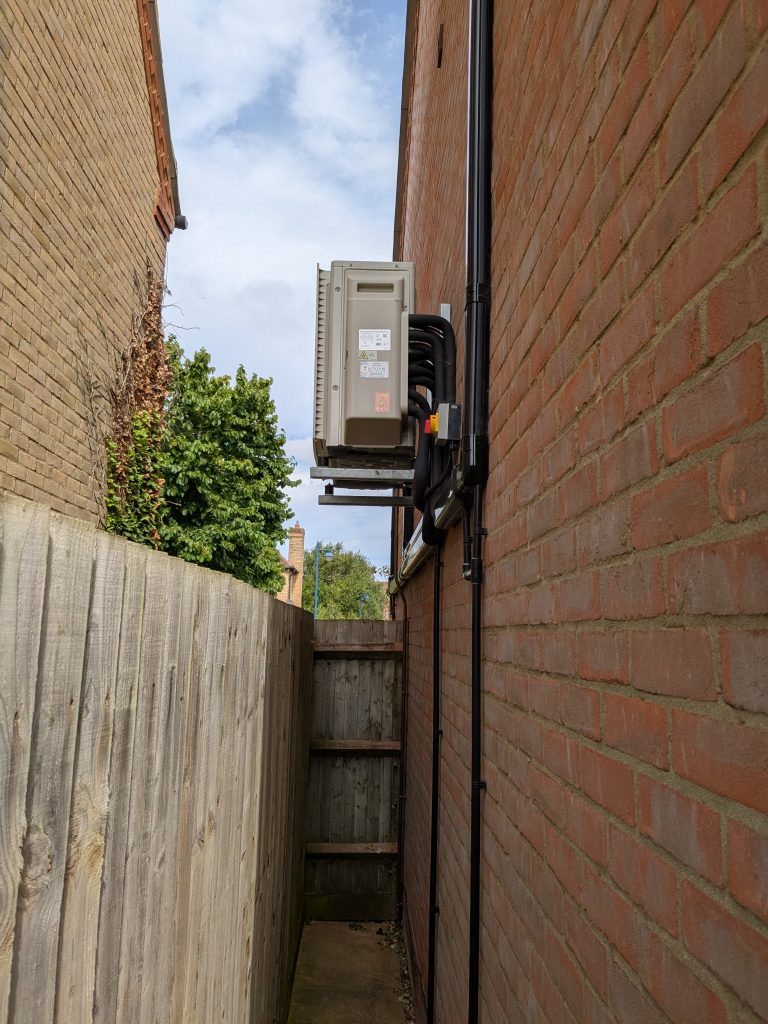
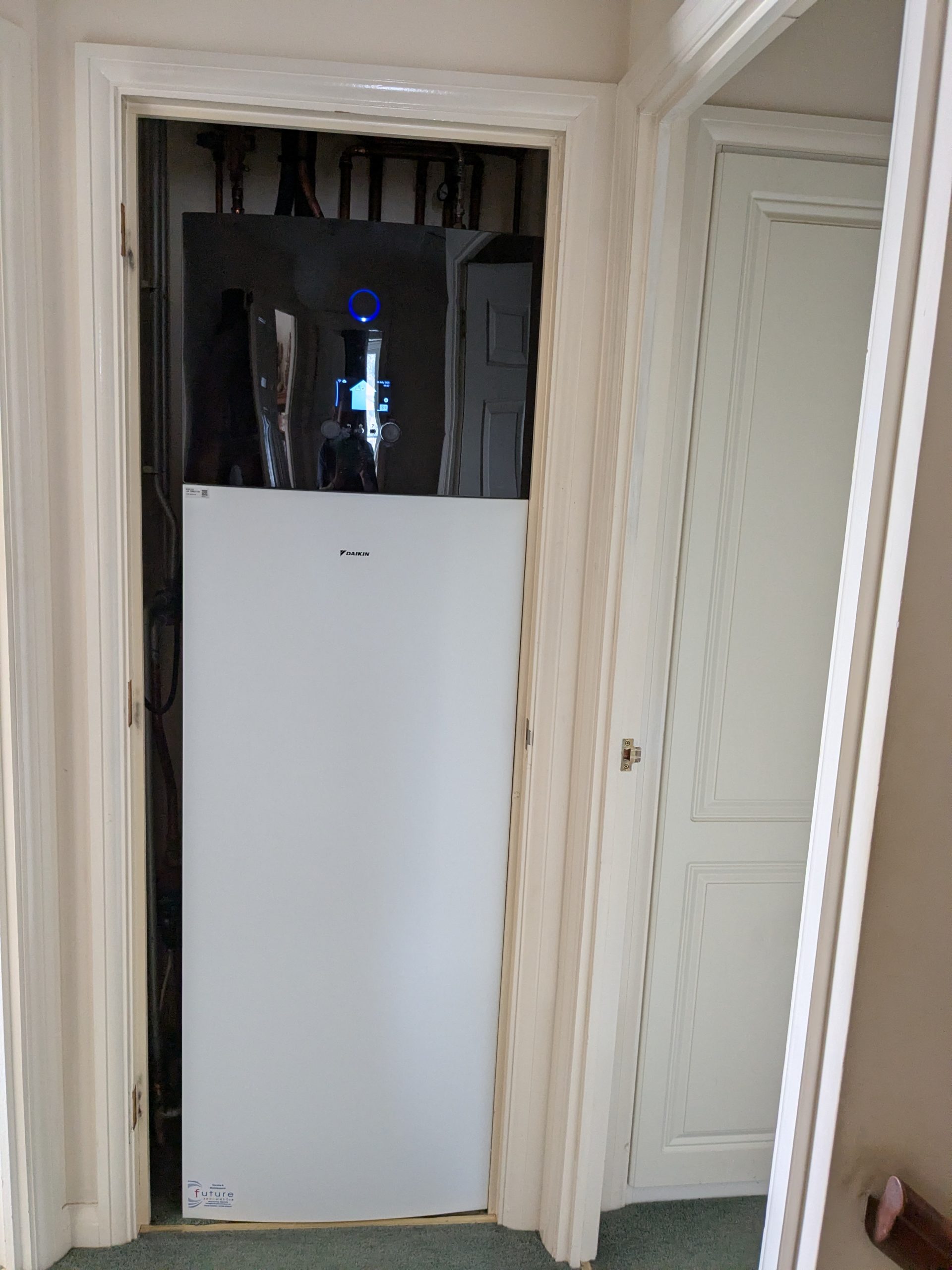
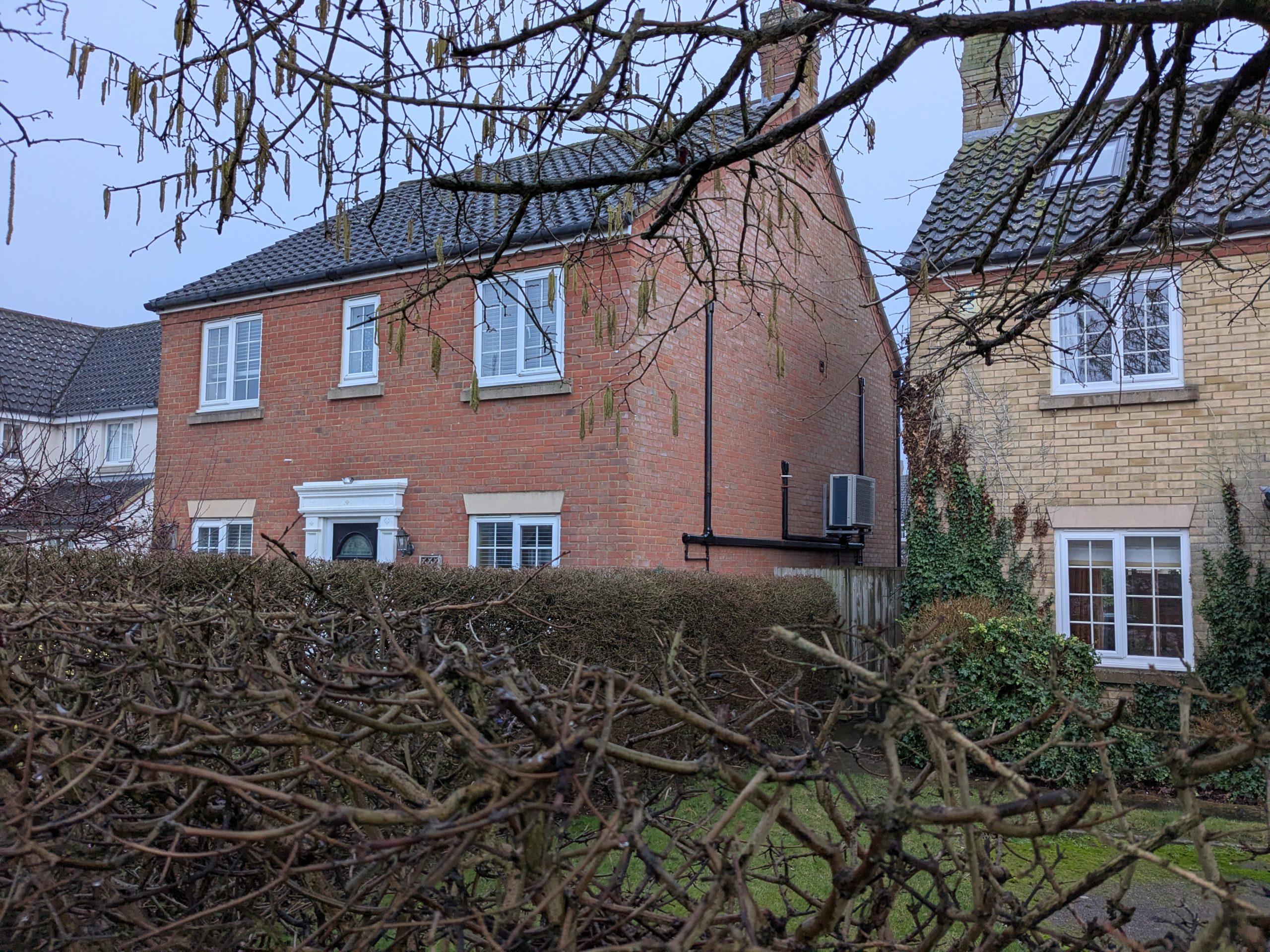
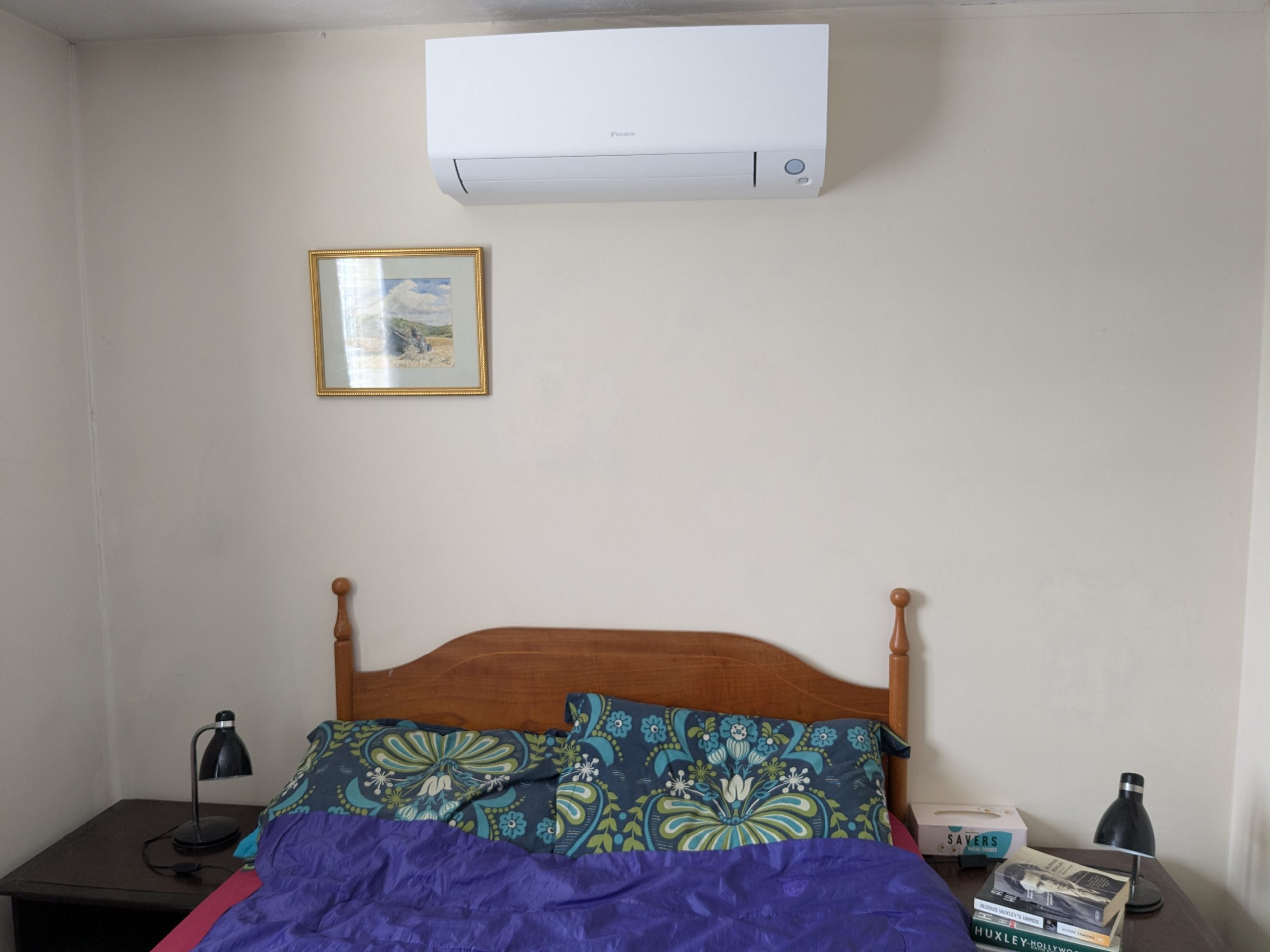
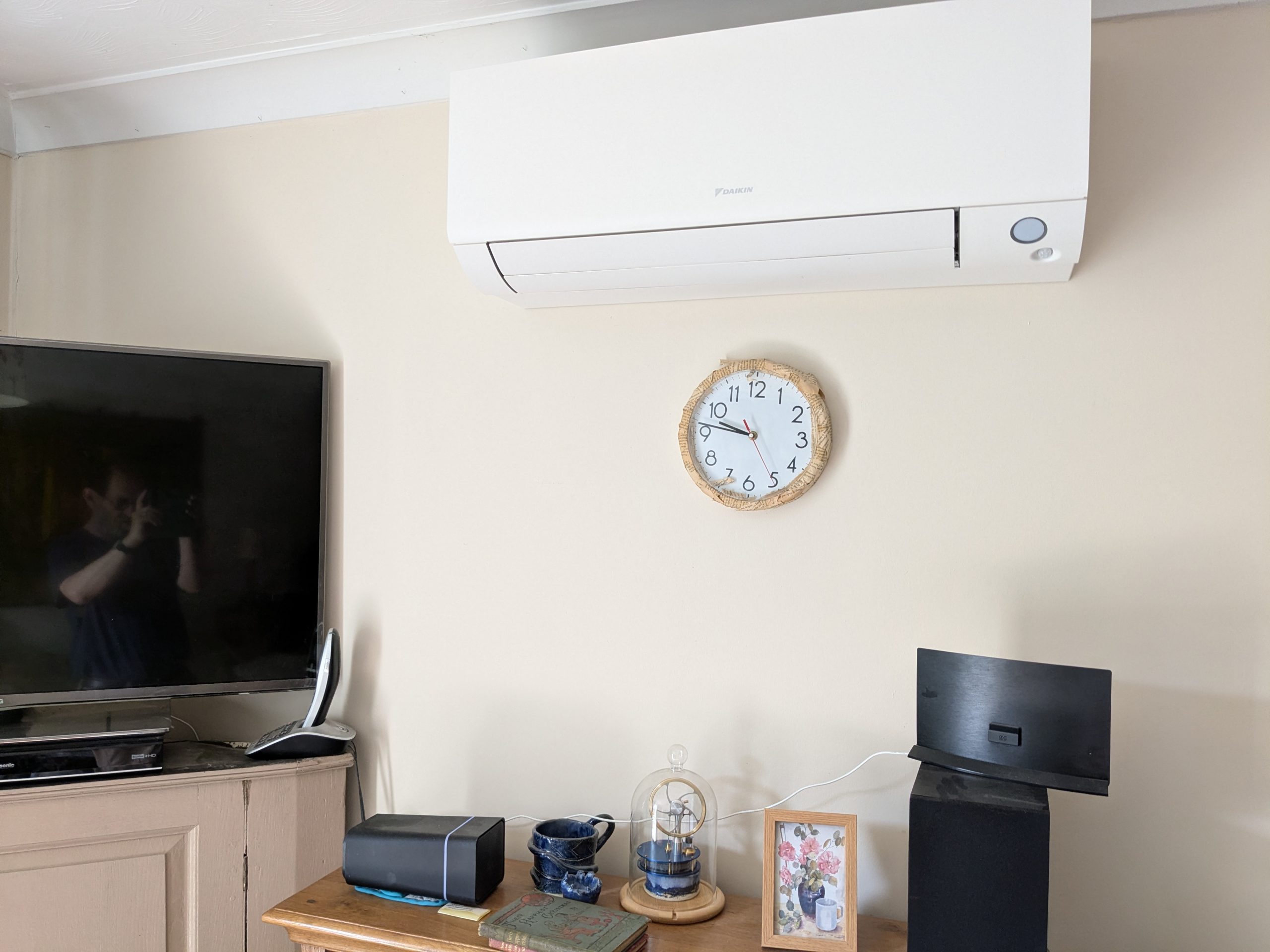
We installed a Daikin 5 way multi-split air-to-air heat pump in February 2026. This provides 4 traditional wall-mounted air conditioner units in 4 rooms (for space heating & cooling) and a new 230 litre hot water tank. We removed the old hot water cylinder and left the existing boiler and radiators in place as an emergency back up. We still use gas for the kitchen hob, so have not been disconnected. The Daikin system provides heating and cooling but not both at the same time. The outside unit is installed high up on a blank wall between my house and next door; it is mostly very quiet during operation. The indoor units make some fan noise during operation, but on ‘low’ or ‘eco’ settings, this is hardly noticeable. Each unit can be individually controlled, programmed and monitored through the phone app.
Photo: air-to-air heat pump
The original quote was for a smaller 150 litre hot water tank, but this proved incompatible with the rest of the system. The installer replaced this with the 230 litre tank at no extra cost, but this required extra plumbing to fit into the space available. The installation took longer than expected (2 weeks) but the installers worked hard and kept disruption to a minimum, and we were only without heating for 1 day, and without hot water for 2 days. The room units work well although the complexity of their operating options took some getting used to, and it is easy to get confused when using both the phone app and the hand held remote controls provided. The system was installed in February, so we have not had a full winter to test it. Our ground floor is relatively open plan so the 2 units can blow warm air through most of the area, but only 2 of our 4 bedrooms have units, and there is no direct heating of the main bathroom or en-suites. These rooms are noticeably cooler as a result. Because we only use the one bedroom and en-suite routinely, this suits us for now, although we have got used to closing room doors more often to keep heat in (or out). We have used the new system to heat the rooms we are in to a higher temperature than we did previously, and left the other rooms cooler. This has enabled us to run the system mostly off our 20kWh battery during the day, and only incurring peak rate electricity charges for brief periods. We hope to reduce our total heating bill for the year to about £500 or less. Our gas bill was previously £800+.
The hot water system has worked overall, but it is a very new feature that Daikin has introduced, and it is not as easy to configure or automate as we would like. The documentation provided is extensive but largely unintelligible. The installers were as confused as we were. We have programmed the system to heat water overnight on a cheap rate, but as the system cannot heat and cool at the same time, so when we used the air conditioning function to cool our bedroom in the recent night time heat, we woke to cool showers a couple of times. Because the tank is far larger than the 2 of us need, and we have low demand for hot water, this isn’t a major problem. The tank is well insulated and thermal losses are low.
We chose an air-to-air system initially because our house is unsuitable for an air-to-water system. We got an Octopus survey which identified that the entire central heating plumbing would need replacing because of very narrow pipes and inadequate radiators. Even with a government grant, the cost would have been excessive and disruption extensive.
The air conditioning option on this system has been a very welcome bonus in the heatwaves of the summer. We have used it in the lounge and bedroom to keep temperatures below 25C on hot days. We run the system in ‘eco’ mode at 500 Watts, which is about 20% of the power our solar panels are typically generating during operation.
Our new systems have resulted in:
However, parts of house are not evenly or fully heated. We need to keep doors open or closed to control heat flow or loss. We currently need 4 different phone apps and internet access to fully control and programme the systems.
OUR TOP TIPS
| Energy Consumption | Electricity (kWh) | Gas (kWh) | Wood (kWh) | Total (kWh) |
|---|---|---|---|---|
| Before | 4500 | 10000 | 0 | |
| After | 3000 | 100 | 0 |
| Carbon Footprint | kgCO₂e/m² | kgCO₂e/person |
|---|---|---|
| Before | — | — |
| After | — | — |
* Wood logs estimated at 2,000 kWh/m³. Carbon factors are applied according to the project year. Where a project start or end date is not provided, 2026 is assumed.