
William started his home energy efficiency journey by lending a thermal imaging camera from Cambridge Carbon Footprint loan scheme in 2022, he is now Home Energy Officer at Cambridge Carbon Footprint.

Going to see a talk by Rob Hopkins, cofounder of the Transition Network, on his then new book ‘From What Is To What If’ at the Cambridge Literary Festival. I started looking at my own carbon footprint and then looking at ways to improve the energy efficiency of our home.
We started with an analysis of the energy consumption of time of day and time of year and a survey of the house with thermal imaging cameras, from CCF, and air-tightness testing. Phase 1 set about improving the fabric: more loft insulation, draught-proofing, double-glazing and two new patio doors. Phase 2 was fitting solar PV panels and battery storage. Phase 3 in summer 2026 was more external shading and rainwater storage.
The aim was to improve the energy efficiency of our home, reduce our carbon footprint, arrive at lower annual energy bills and improve the quality of the internal space, not too hot, not too cold or draughty and with good air quality. Gas consumption is down ~20% and electricity purchased down by ~60%. A significant cut in carbon footprint. Bills are down especially electricity which is down 80%.
Deeper loft insulation, now 300mm thoughout. Draught proofing: fitting internal plastic letter box and key hole covers; windows with new silicon or rubber seals; calking gaps between skirting boards and floors; sealing low voltage ceiling light fittings in bedrooms. Additional insulation between sloping bedroom ceilings and the roof.
The house is noticeably less draughty and feels warmer on cold windy winter nights.
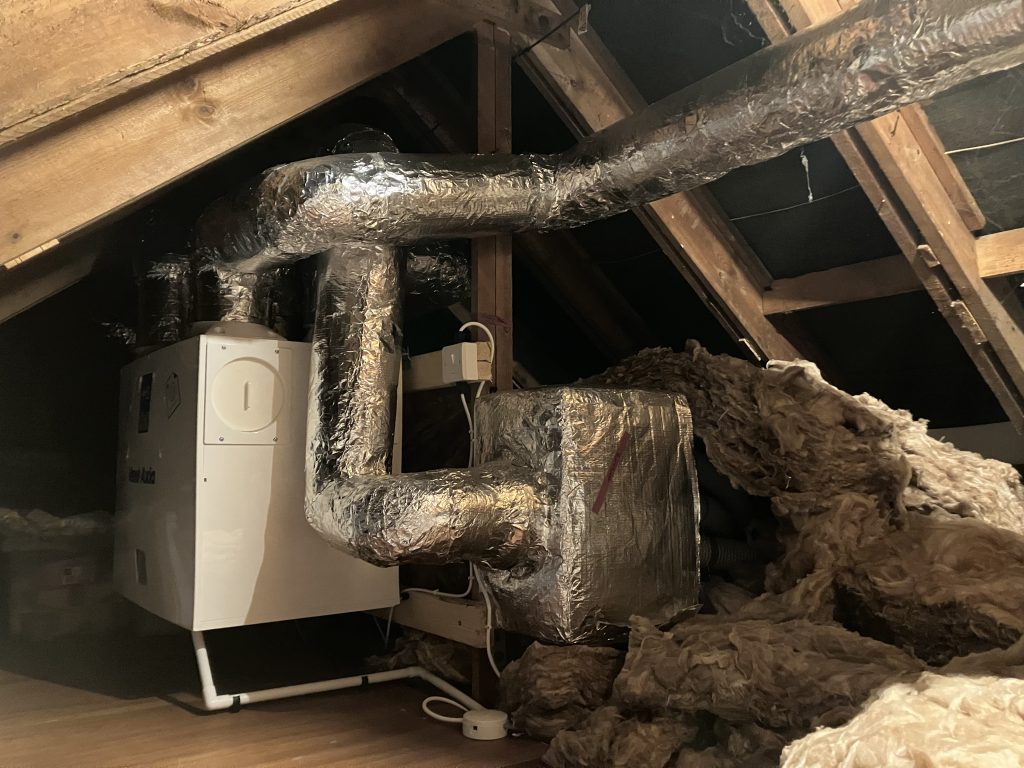
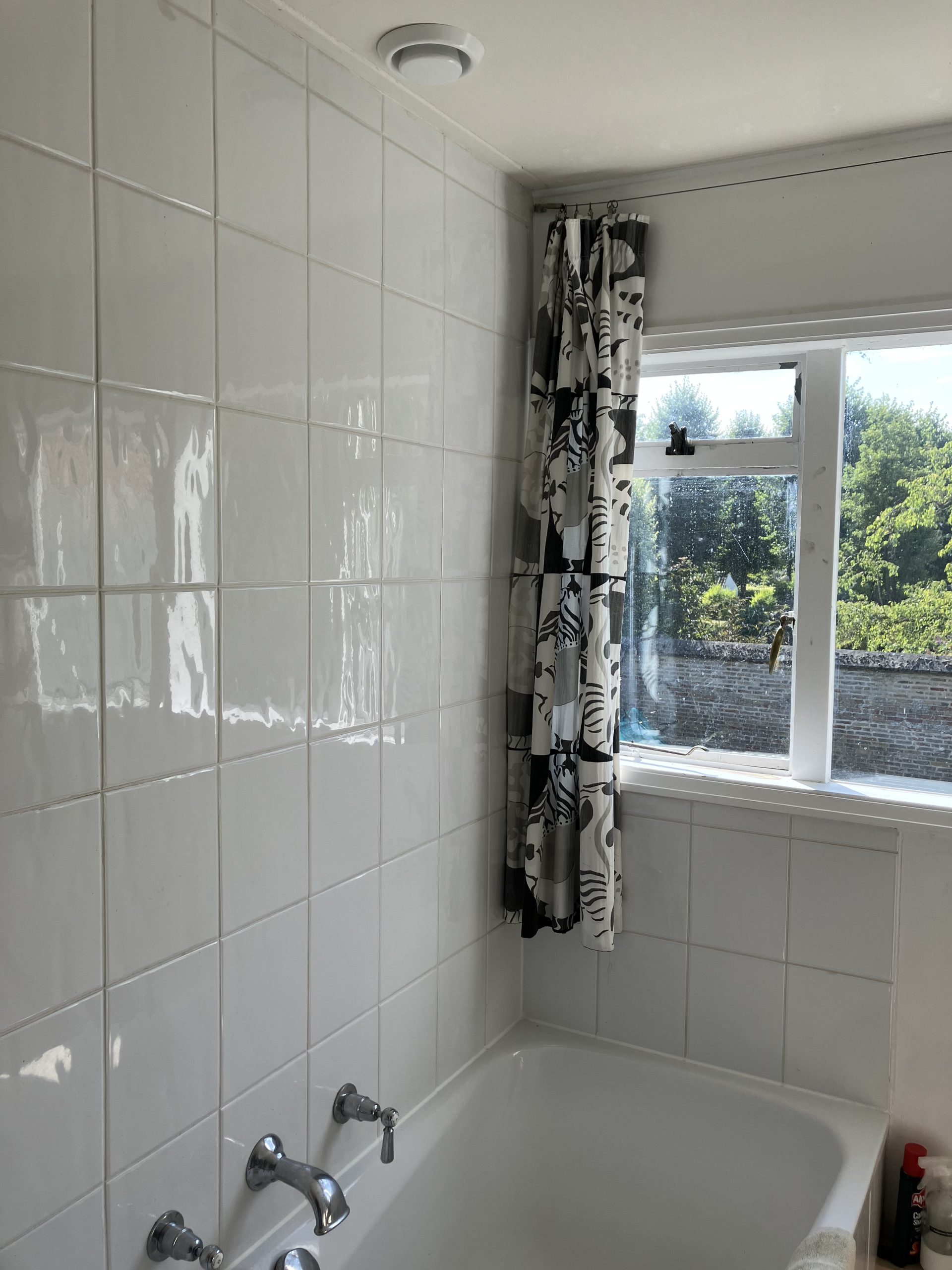
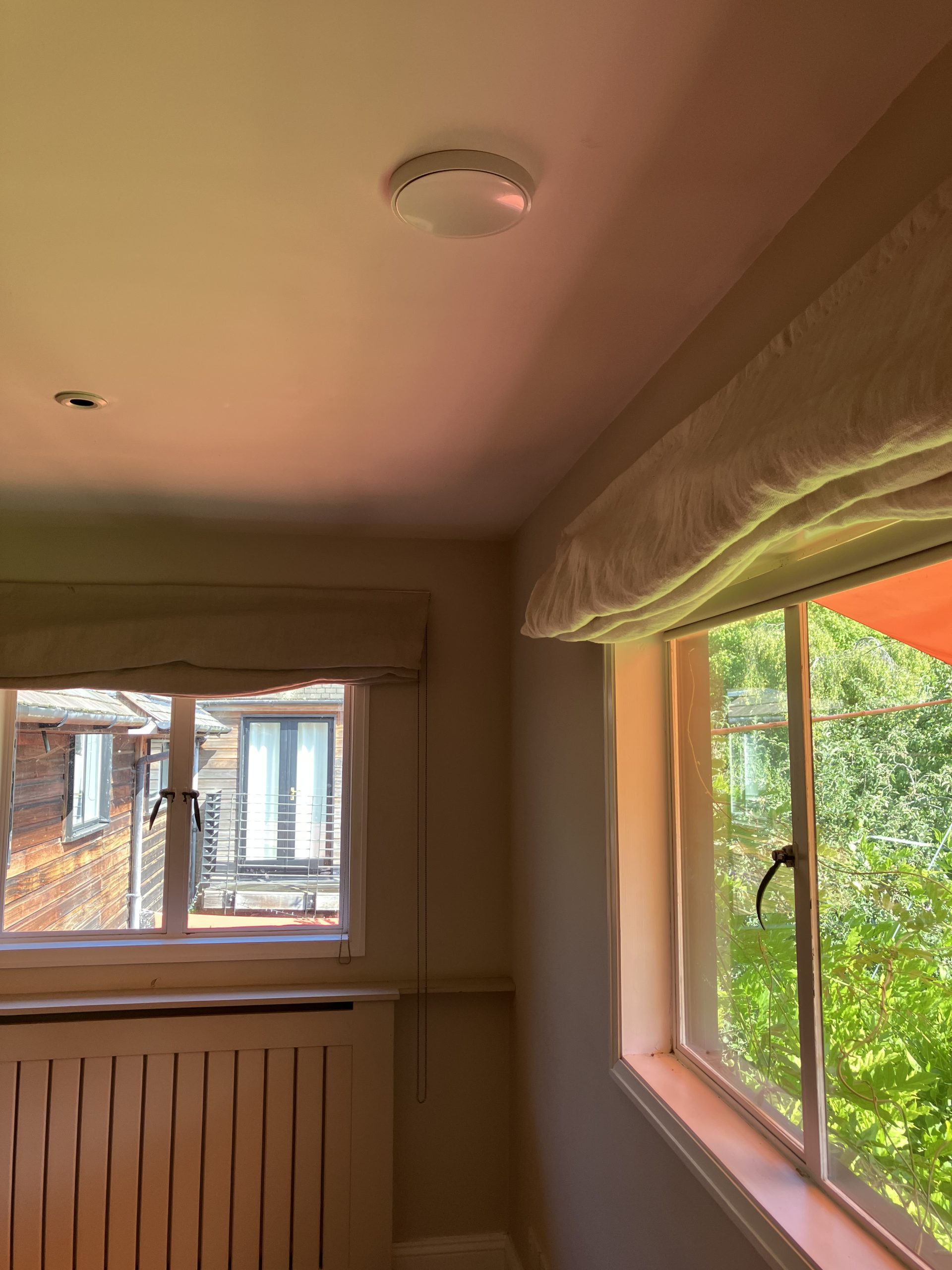
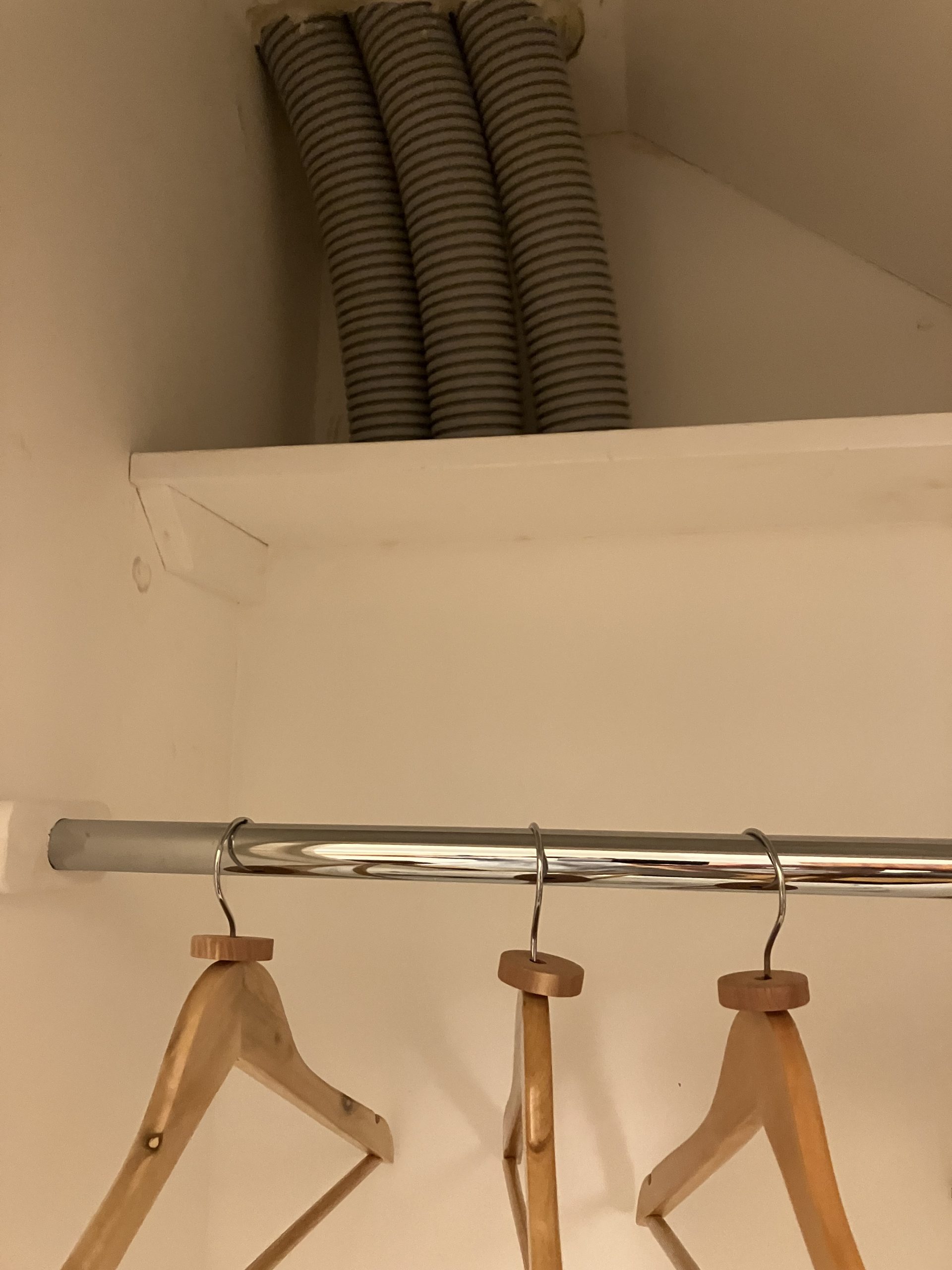
As we had sealed the house as much as we could we thought an MVHR was a good idea to improve air quality and reduces heat loss from having to regularly open windows or doors instead. We needed a patient and custom fitter to get all the ducting in to our house in an invisible way, through cupboard and onesome boxed in section in our utility room.
– Vent Axia Plus B System (91% efficiency)
– Quiet Vent premium radial ducting
– 9x air supply valves
– 7x air extraction valves
– Summer bypass
– filtration 2x G4
Jason also services the system replacing the filters annually.
This is the retrofit feature Fiona is most pleased with, for the improved air quality and the summer bypass air purge feature you can run at the press of a single button to bring cold air in to the house on hot stuffy nights. The vents are very discrete and completely silent in normal operation and just audible during a purge. The price ~£12,000 seems reasonable.
Jason at Temperature Management Group Ltd. took enormous care, discussed everything very fully with us before doing anything and worked closely with Vent Axia experts to specify and commission the system.
New double glazing where original single glazed windows remained and replacing perished double glazing units on the sunny south side. Total cost ~£6,000. Two new custom double patio doors from Eterno windows to replace leaky and high heat loss original crittal patio doors.
We are particularly happy with our new patio doors which are exceptionally well designed, the contractors who came over from Italy took exceptional care designing the doors and did a great job coming back to fit them. The 17-week lead time was well worth the wait! At ~£7,500 a pair they were not cheap, but beautifully made and a very low u-value for very low heat loss. My review and picture of our doors are on their website at https://eterno-uk.com/excellent-reviews/ from William O.

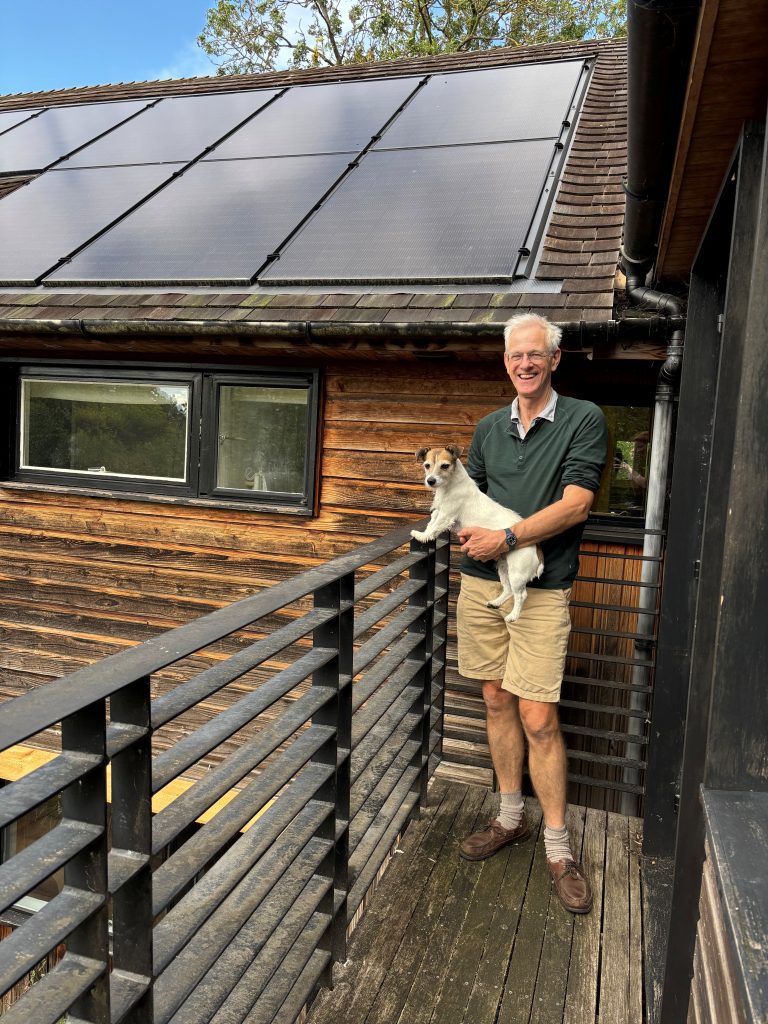
As we have a cedar shingle roof we need to use an in-roof systems. The system fitted has:
– 12x Jinko 440W Tiger-Neo Solar PV Panels in GSE in-roof trays
– 5kW SunSynk Single Phase Hybrid Inverter
– 2x 5.12kWh SunSynk batteries
– Eddi Diverter to allow us to power our hot water immersion heater
It all works fully as expected. The Eddi diverter was not actually required but they forgot to wire up the inverter’s auxiliary output, so was a work around they included at no extra charge.
Very pleased with the 80% reduction in electricity bills, we should be in profit in ~10 years!
Not so pleased that I have been unable to program the SunSynk inverter automatically from my HomeAssistant gismo to make use of free or very low cost tariffs when outside of the nominal 23:30-05:30 Octopus Intelligent Go tariff cheap rate period. I need some extra connectivity on the Modbus provided for remote monitoring.
Optimum Electric, from Peterborough, were chosen as they could also do all the roofing work (new cedar shingles) and at ~£12,000 for the solar & storage system, competitively priced. They were very professional throughout and a pleasure to do business with. Apart from the two minor issues mentioned above, they have given excellent service before, during and after installation.
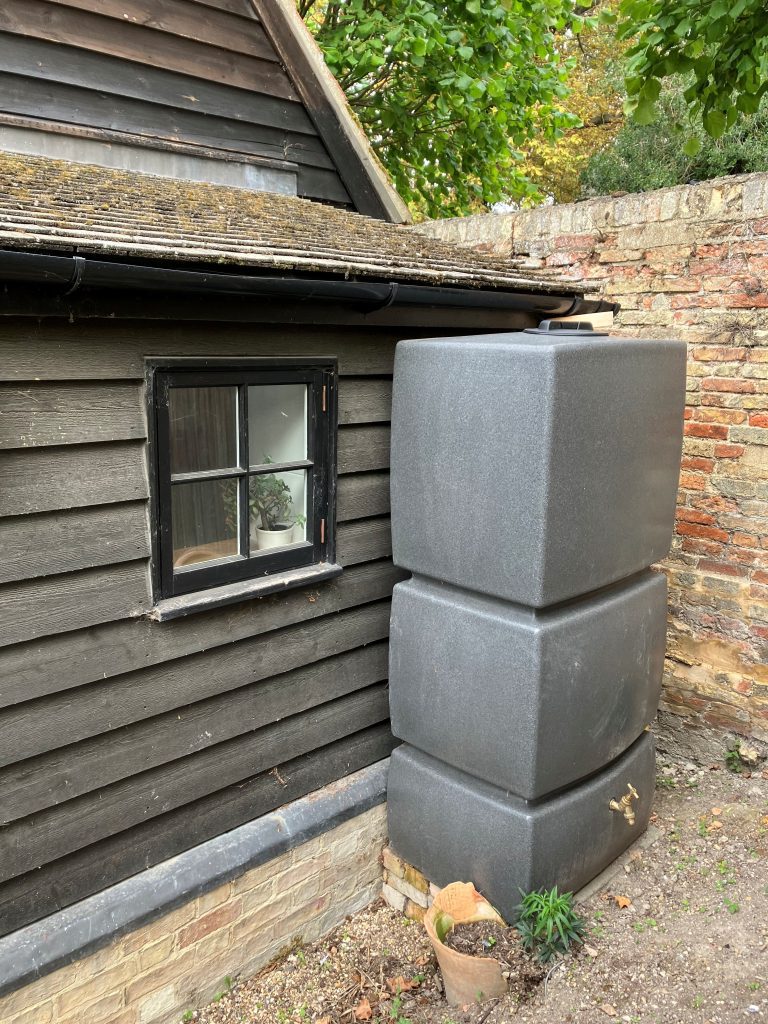
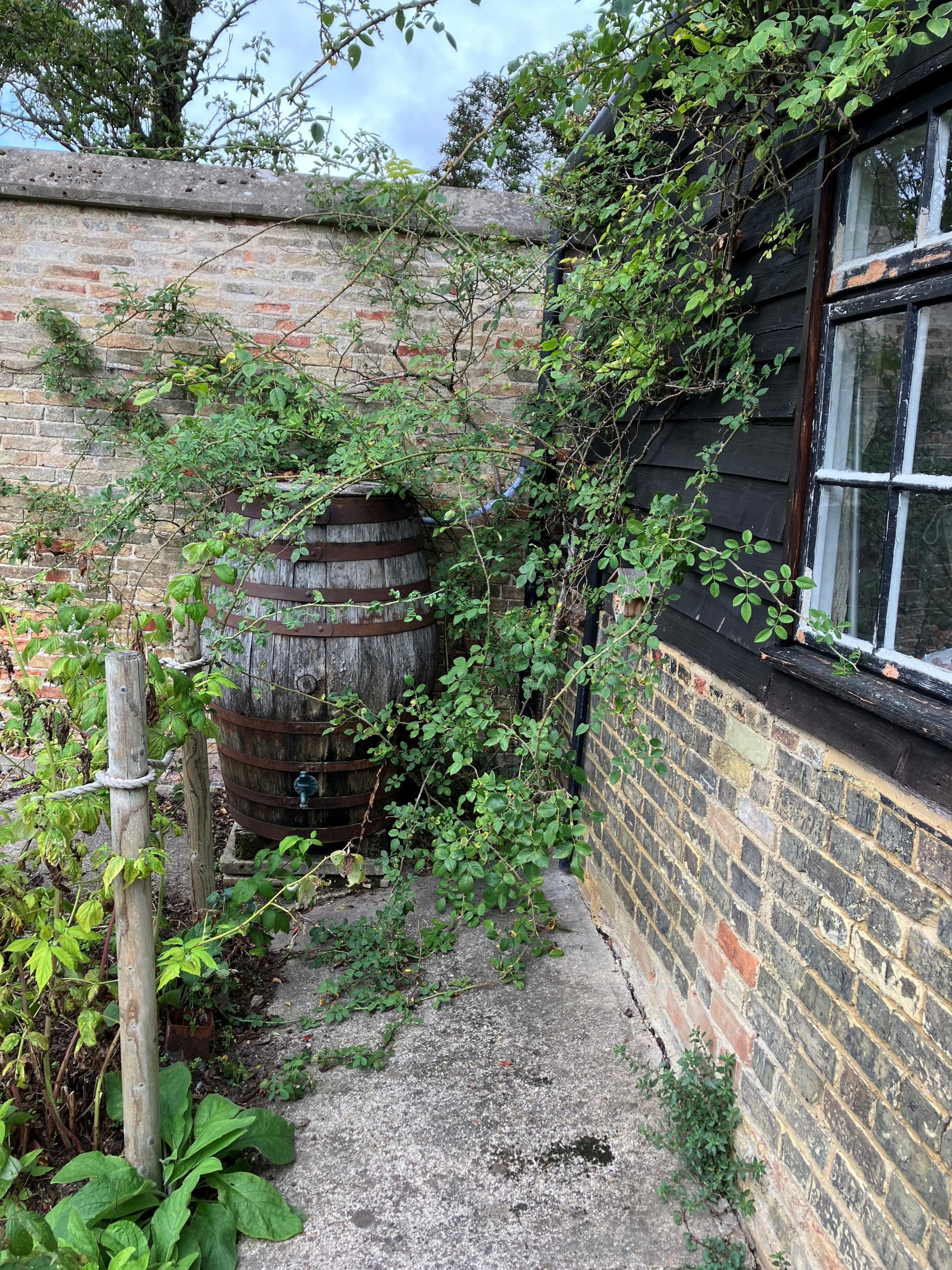
We already had a fair few rainwater butts, mainly old whisky barrels, the largest being a butt (~500l) pictured below, but when they dry out they leak a lot. So this year we installed a whopping 825l pillar rainwater tank in the corner, not so pretty, but we’ll hide with planting. It is yet to fill up!
External awnings fitted over the south facing windows of the master bedroom and Fiona’s studio following Tom and Anne’s brilliant Install DIY Awnings web page https://cambridgecarbonfootprint.org/actions/install-diy-awnings/ So simple, effective and inexpensive too.
Plus external shade awnings on the two Velux windows of the studio. Pretty much all Velux windows have this option either from Velux or slightly less expensive from Itzala. Once you can decipher the pictures only instructions they were pretty easy to install.

The solution needed for our home was quite specific to our house we needed to analyze the issues, educate ourselves and find the right installers. It took several years and we are not done yet, it’s a journey,
| Energy Consumption | Electricity (kWh) | Gas (kWh) | Wood (kWh) | Total (kWh) |
|---|---|---|---|---|
| Before | 4780 | 26453 | 3 | 0 |
| After | 2737 | 20599 | 3 | 0 |
| Carbon Footprint | kgCO₂e/m² | kgCO₂e/person |
|---|---|---|
| Before | — | — |
| After | — | — |
* Wood logs estimated at 2,000 kWh/m³. Carbon factors are applied according to the project year. Where a project start or end date is not provided, 2026 is assumed.